Free first chapter
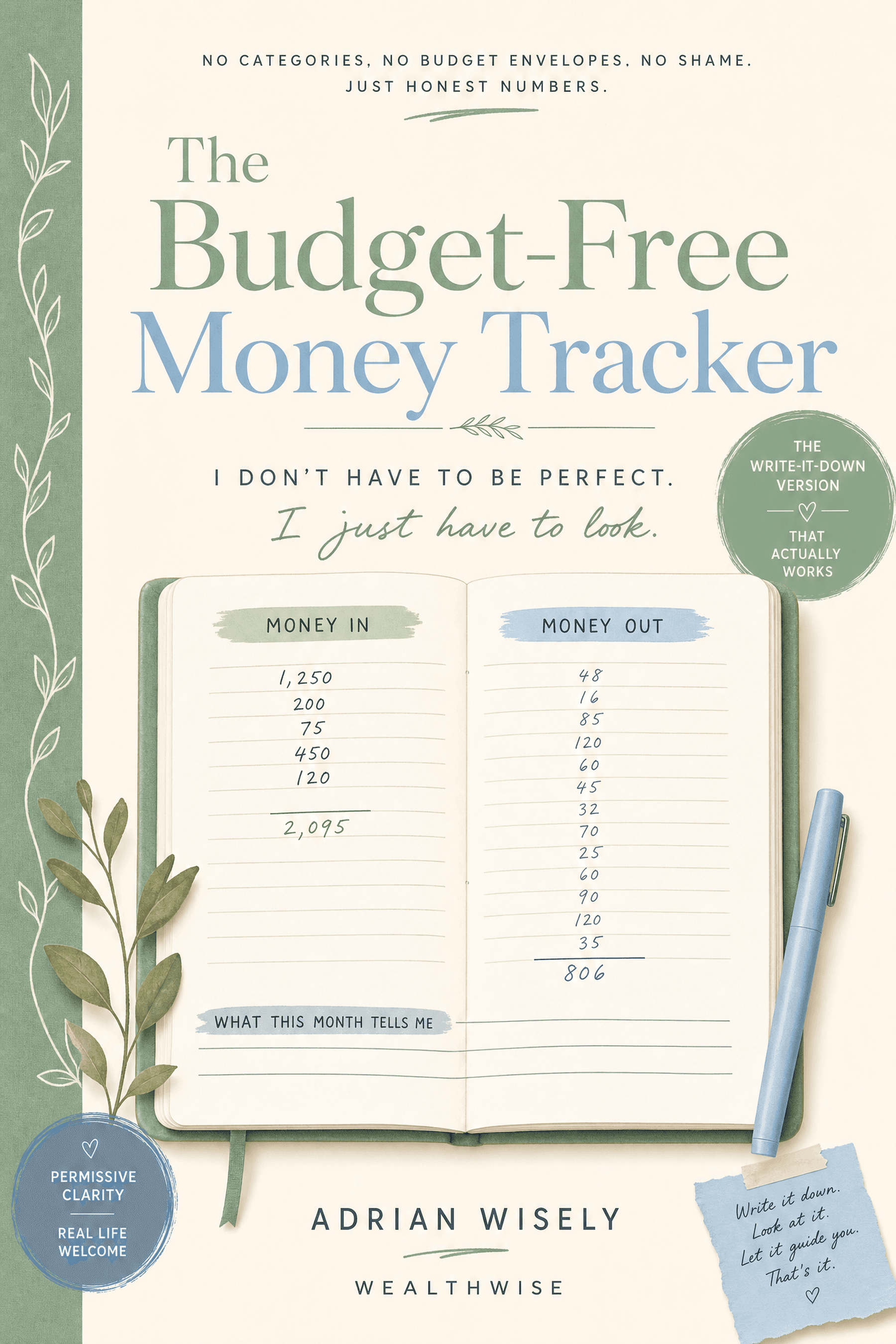
The Budget-Free Money Tracker
For People Who Hate Budgets But Like Having Money
Read the first chapter in your browser. It's free, with no account and no email needed.
Free to read. No account required.
About this book
If budgets make you feel as though your money is on a diet, you may have given up on them more than once. This tracker takes a different approach: you do not plan, you just write down what happens.
Each week has a two-page spread. On the left is a daily money log with a line for what you spent, how much, and, if you like, how you felt about it. On the right is a weekly snapshot showing what you spent, what you earned and the difference. Once a month a check-in asks what surprised you, what you would change and what you are keeping. A quarterly pattern page and an annual summary show the bigger picture.
At the back, an optional page called Where Did It Go lets you sort spending into categories, but only if you are curious.
Look inside
You Don't Have to Budget. You Just Have to Pay Attention.
Here's a number that might surprise you: when researchers ask people to estimate their monthly spending, most are off by 20-40%. Not because they're careless. Because spending is genuinely hard to track when you're living your life.
The standard advice is to make a budget. Assign every dollar a job. Categorize everything. Stick to the plan.
That works for some people. For others, it feels like putting their money on a diet — and they respond to it the same way they respond to actual diets. They try it, hate it, abandon it, feel guilty, and then spend even less attention on their finances than before.
If that sounds familiar, this book is for you.
Who This Is For
This tracker is for people who don't want a budget but do want to understand where their money goes. It's for the person who earns enough to be fine but keeps wondering why there's not more left at the end of the month. It's for anyone who has tried budgeting apps, spreadsheets, or envelope systems and found them more annoying than useful.
You don't need categories. You don't need to pre-plan your spending. You don't need to feel bad about buying coffee.
You just need to write things down.
How It Works
Daily Money Log. Each week gets a two-page spread. On the left, you have seven rows — one per day. For each day, write what you spent, how much it was, and (if you want) how you felt about it. That last column is optional, but it's where the interesting insights tend to show up.
On the right side is your weekly snapshot: total spent, total earned, and the difference. Plus one line for a reflection if you want it.
That's the whole system. No categories to assign. No budget to compare against. Just the facts.
Monthly Check-In. Once a month, you add up the totals and answer three questions: What surprised you? What would you change? What are you keeping? These check-ins are where tracking turns into awareness.
Quarterly Pattern Page. Every three months, you sketch a simple bar chart of your monthly spending and look for patterns. Are you spending more in December? Is summer cheaper than you thought? Patterns tell you things that individual transactions can't.
Annual Summary. At the end of the year, you'll have a complete picture of your financial life — twelve months of income, spending, and the gap between them. For many people, this is the first time they've ever seen that picture clearly.
The "Where Did It Go?" Page. At the back, there's an optional category breakdown page. It's labeled "Only if you feel like it" because that's exactly the energy this book runs on. If you're curious about how much you spent on food versus entertainment, you can sort your spending here. If you're not curious, skip it entirely.
Why This Works
Tracking without a budget works because it removes the judgment. There's no "over budget" or "under budget." There's just "here's what happened." And when you see what happened consistently for a few months, you start making different choices — not because a spreadsheet told you to, but because you genuinely want to.
Researchers call this the "awareness effect." People who simply track their spending, without any budget or spending rules, tend to spend 10-15% less over time. Not through deprivation. Through attention.
Getting Started
Open to the first weekly spread. Write today's date. Log what you spent today. If you haven't spent anything yet, wait until tonight and fill it in before bed.
That's it. Do that for seven days, and you'll have your first weekly snapshot. Do it for four weeks, and you'll have your first monthly check-in.
No apps. No formulas. No guilt. Just a pen and a little bit of honesty.
Quotes to share
If budgets make you feel as though your money is on a diet, you may have given up on them more than once.
Free to read. No account required.