Free first chapter
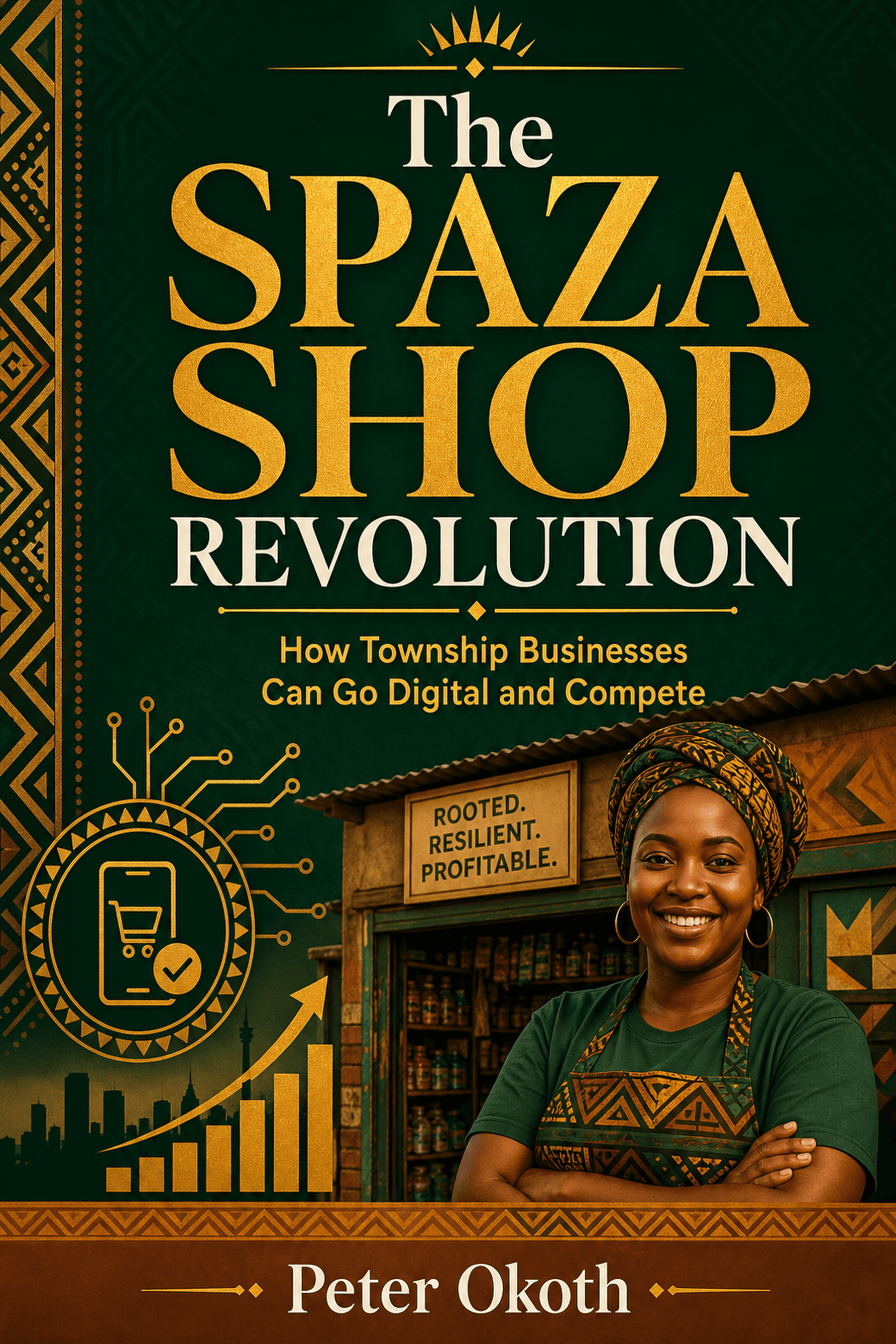
The Spaza Shop Revolution
How Township Businesses Can Go Digital and Compete
Read the first chapter in your browser. It's free, with no account and no email needed.
Free to read. No account required.
About this book
Spaza shops stay open when the big chains close. They serve neighbours, sell on credit, and carry the trust of the community. Every few months someone predicts their end, but the shops that will last are the ones that adapt, combining that community trust with better tools and better numbers.
The Spaza Shop Revolution is a modernisation manual for township businesses. It begins by making the case that the spaza shop is not dying, then shows you how to move from cash to card with digital payments. You will learn stock management so you stop guessing, build stronger supplier relationships and buy in bulk smarter, and use social media to bring in customers. Another chapter covers compliance, registration, and SARS.
You will also see how to compete with the big chains on your own strengths. The book ends with your own digital spaza plan, with practical steps for owners, aspiring owners, and stokvel groups.
Look inside
Preface
There are over 100,000 spaza shops in South Africa. They serve millions of customers every day – in townships, in informal settlements, on street corners. They sell bread, milk, airtime, cold drinks, snacks, and a thousand other daily essentials. They extend credit to neighbours who are short before payday. They stay open when Shoprite has closed. They are the backbone of township commerce.
And yet, every few months, someone writes an article about "the death of the spaza shop." Competition from chain retailers. New regulations. The rise of e-commerce.
Haai suka. The spaza shop is not dying. It is evolving.
The spaza shops that will thrive in the next decade are the ones that go digital – accepting card payments, tracking stock, marketing on WhatsApp, buying smarter from suppliers, and understanding their numbers. They will combine the convenience and community trust that chains cannot replicate with the operational efficiency that technology provides.
This book is the modernization manual.
Who This Book Is For
- Spaza shop and tuck shop owners who want to modernize their operations
- Township business owners selling from containers, garages, or standalone shops
- Anyone starting a retail business in a township or informal area
- Stokvel groups considering a collective retail business
What You Will Walk Away With
By the last page, you will know how to accept digital payments, track your stock efficiently, negotiate better with suppliers, market your business on social media, register with SARS, and compete with chain retailers by leveraging your unique advantages.
The spaza shop built townships. This book builds the spaza shop.
The Spaza Shop Is Not Dying
MaNkosi has run a spaza shop in Orange Farm for eleven years. Bread, milk, cold drinks, airtime, snacks, eggs, and loose cigarettes. The same stock as every other spaza on the block. The same prices. The same small shop with the same burglar bars.
Six months ago, she changed three things. She got a Yoco card machine (R499 for the device). She created a WhatsApp Business catalogue showing her stock and prices. And she started tracking her best-selling items in a notebook – not just what she sold, but what sold out first, what customers asked for that she did not have, and what sat on the shelf for too long.
Her revenue increased by 35% in six months.
Not because she moved to a better location. Not because she dropped her prices. Not because the competition disappeared. But because customers could pay by card (higher average transaction – people spend more when they tap than when they count cash), they could see her stock on WhatsApp before walking over (she sends a broadcast list every Monday), and she stocked more of what sells and less of what does not.
The spaza shop across the road – same size, same location, same products – is losing customers to MaNkosi. Cash only. No WhatsApp. No stock tracking. The owner says business is "dying."
Business is not dying. His business is. Because he is running a 2010 shop in 2026.
What You Will Learn
- Why the spaza shop is not dying – the market is larger than ever
- What the digital modernization opportunity looks like
- Three changes that can increase revenue by 20-40%
- What this book will teach you chapter by chapter
The Numbers
South Africa has an estimated 100,000+ spaza shops and informal retailers. They serve millions of customers daily. The township retail market is worth tens of billions of rand annually.
These are not marginal businesses. They are the primary retail infrastructure for a majority of South African consumers. They sell what people need, where people live, at hours that suit people's lives. Try buying a loaf of bread at 9pm from Shoprite. Haai. The spaza shop down the road is open.
The narrative that spaza shops are "dying" comes from people who do not shop at them. The reality: the market is growing. Township populations are growing. Demand for convenience retail is growing. What is changing is how that retail is delivered.
The spaza shops that will thrive are the ones that modernize. The ones that will struggle are the ones that stay exactly as they are.
The Three Modernization Levers
1. Digital Payments
Accepting cards increases average transaction size by 15-30%. Customers spend more when they tap. They also come to you when they do not have cash – which is increasingly often.
Card machines from Yoco and iKhokha cost R399-R999. Transaction fees are 2.6-2.75%. On a R100 transaction, you pay R2.75 in fees but gain R20-R30 in additional revenue from the higher average spend.
Chapter 2 covers this in detail.
2. Digital Marketing
WhatsApp Business is free. It lets you create a product catalogue, send broadcast messages, and communicate with customers. MaNkosi sends a Monday morning broadcast to 180 customers: "This week's specials: Bread R16, 2L milk R32, Simba chips R8." Customers plan their shopping around her specials.
Facebook and TikTok for local marketing are free. A 30-second video of your fresh stock, posted to a local community group, reaches hundreds of potential customers.
Chapter 5 covers digital marketing for township businesses.
3. Stock Intelligence
Knowing what sells, what does not, and what customers want but you do not stock is the difference between a profitable shop and one that bleeds money through dead stock.
You do not need expensive software. A notebook, used consistently, is enough. Track: what sold today, what sold out, what customers asked for, what has been sitting for more than a week.
Chapter 3 covers stock management systems – from notebooks to apps.
Your Checklist
- ☐ — I accept card payments — If not, Chapter 2 shows you how – starting this week
- ☐ — I use WhatsApp Business — If not, Chapter 5 shows you how – it is free
- ☐ — I track what I sell — If not, Chapter 3 shows you how – even with a notebook
Your Move
- If you do not accept cards yet: Read Chapter 2 and get a Yoco or iKhokha device this week. The investment is under R1,000.
- Download WhatsApp Business (it is free) and set up your profile and catalogue. You can do this tonight.
- Start a sales notebook tomorrow. Write down what you sold and what sold out. Do this for two weeks. The patterns will surprise you.
Key Terms
Spaza shop
Yoco / iKhokha
WhatsApp Business
What is Next
Chapter 2 is the practical guide to going digital with payments – which device to choose, how to set it up, what the fees are, and how to handle the transition from cash-only to cash-and-card.
Digital Payments: The Cash-to-Card Switch
Accepting card payments is the single fastest change you can make to increase your spaza shop revenue. It is also the simplest. A device. A bank account. A few minutes of setup. And you are ready.
This chapter walks you through every option, every cost, and every step.
What You Will Learn
- Why card payments increase revenue (not just convenience – actual higher spending)
- Compare Yoco, iKhokha, and SnapScan side by side
- Set up a card machine step by step
- Handle the transition from cash-only to cash-and-card
Why Cards Increase Revenue
There are three reasons accepting cards makes you more money:
1. Higher average transaction. Research consistently shows that customers spend 15-30% more when paying by card compared to cash. When a customer taps, there is no physical sensation of "losing money." When they count out notes and coins, they feel every rand. This is not theory – it is measured retail data.
Free to read. No account required.