Free first chapter
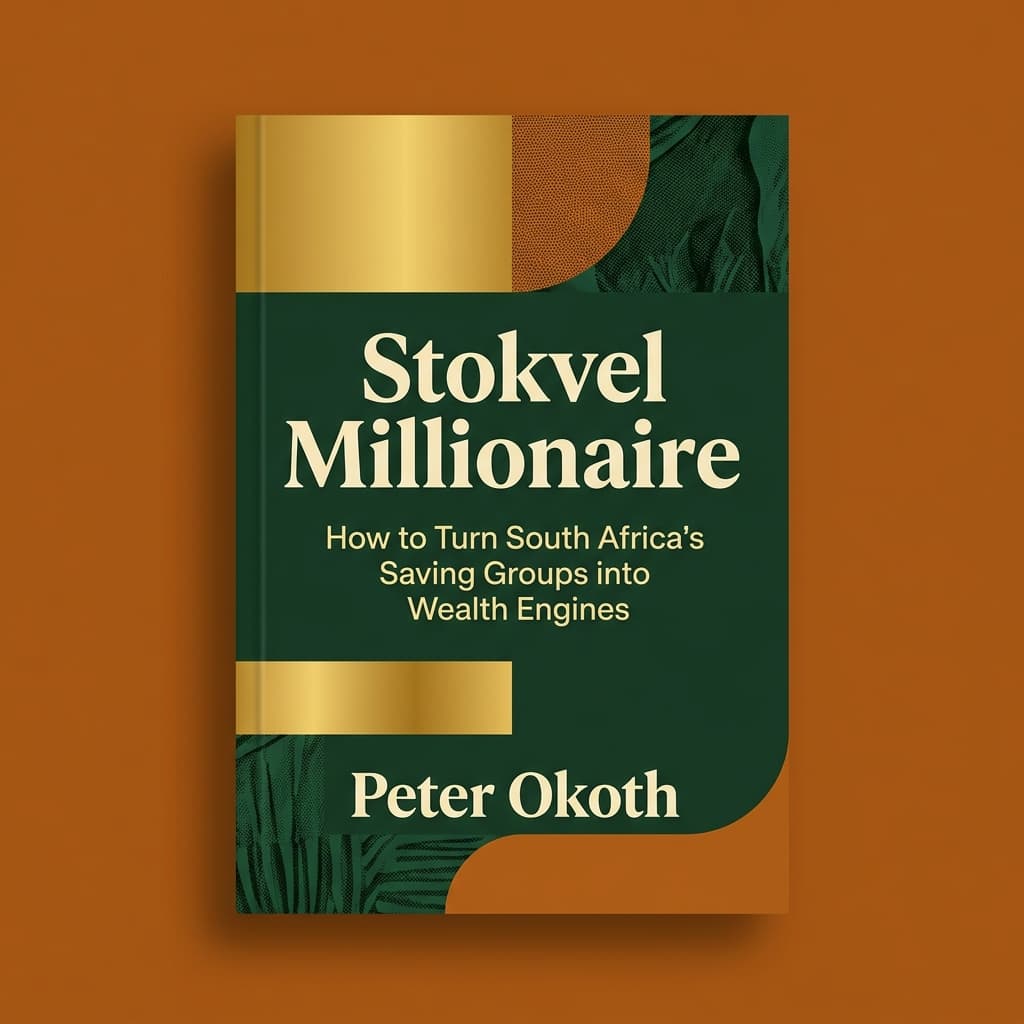
The Stokvel Millionaire
How to Turn Your Savings Group Into a Wealth Machine
Read the first chapter in your browser. It's free, with no account and no email needed.
Free to read. No account required.
About this book
Your stokvel already does something powerful: a group of people contributing every month, holding each other accountable. But most stokvels stop at rotating savings, buying groceries, or covering funerals. This book is about the "more."
The Stokvel Millionaire starts by looking at the stokvel system and why calling it informal sells it short. You will see structures designed for building wealth rather than only saving, and a playbook for investing stokvel funds, from unit trusts to shares. A chapter on stokvel property investment covers what to consider when a group buys together.
The book also covers the governance that protects members through a strong constitution, along with banking, tax, and compliance basics, and how to scale a group beyond its first dozen members. It ends with a stokvel wealth plan to adapt to your own group. This is general education, not personal financial advice.
Look inside
Preface
There are over 800,000 stokvels in South Africa. They manage an estimated R50 billion every year. That is not a typo. Fifty billion rand – flowing through community savings groups that the formal financial system still calls "informal."
Informal. As if a system that has sustained Black South African communities through apartheid, structural unemployment, and economic exclusion for over a century is somehow less real than a bank that charges you R7 to check your own balance.
The stokvel is not informal. It is one of the most powerful financial instruments in South Africa. It is disciplined (members contribute every month without fail). It is democratic (decisions are made collectively). It is accountable (everyone knows everyone). And it is effective – millions of South African families have bought groceries, buried loved ones, educated children, and purchased homes through stokvels.
But most stokvels stop at saving. They rotate money. They buy December groceries in bulk. They cover funeral costs. All of which matters – profoundly. But the stokvel can do more. Much more.
This book is about the "more."
Who This Book Is For
- Stokvel members who want their group to do more than rotate savings
- Stokvel organizers looking for better governance, structure, and investment strategies
- People starting new stokvels who want to build them right from the beginning
- Anyone who has R500 a month, eleven friends, and the ambition to build generational wealth collectively
What You Will Walk Away With
By the last page, you will know how to structure a stokvel for wealth building (not just saving), how to invest stokvel funds in unit trusts, property, and shares, how to write a constitution that protects every member, how to open a stokvel bank account and stay compliant with SARS, and how to scale your stokvel from a neighbourhood group into something much larger.
Every strategy in this book has been used by real South African stokvels. Every legal requirement reflects current SA law. Every financial product mentioned is available to stokvels today.
Ubuntu says "I am because we are." The stokvel proves it. This book shows you how to make it build wealth.
The R50 Billion System They Call "Informal"
In Katlehong, east of Johannesburg, there is a stokvel that has been running for 22 years. It started in 2004 with 15 women – teachers, nurses, retail workers, domestic workers – who each contributed R200 a month to buy groceries in bulk for December. That was the original purpose. Feed the family cheaper.
The stokvel did not stop there.
By 2008, the members had built up surplus funds. Instead of distributing everything in December, they voted to keep a portion invested. They opened a 32-day notice account at Capitec. They learned about unit trusts. By 2012, they had R80,000 in a balanced fund.
In 2015, they made the decision that changed everything. They bought a two-bedroom house in Katlehong for R180,000 – a property that had been repossessed by the bank and was selling at auction. They fixed it up for R35,000 using money from the fund and labour from members' families. They rented it out for R2,800 a month.
In 2019, they bought a second property. By 2026, their combined assets – two rental properties (valued at approximately R750,000 and R580,000), a unit trust balance of R180,000, and cash reserves of R40,000 – total approximately R1.55 million.
Fifteen women. Average contribution over 22 years: R156,000 per member (contributions increased over time from R200 to R800 per month). Combined lifetime contributions: approximately R2.34 million. Current assets: approximately R1.55 million plus R1.2 million in cumulative distributions (bulk groceries, educational grants, and emergency loans) over two decades.
The system worked. It built wealth. It fed families. It educated children. It created property owners out of women who, under apartheid, were denied the right to own property at all.
And the financial system still calls it "informal."
What You Will Learn
- The true scale and economic power of South Africa's stokvel system
- Why the "informal" label is wrong – and what stokvels actually are
- The difference between stokvels that save and stokvels that build wealth
- The transformation this book will guide you through
The Numbers
The stokvel is not a niche phenomenon. It is a pillar of the South African economy.
- 800,000+ active stokvels in South Africa
- R50 billion managed annually through stokvels
- 11 million+ South Africans participate in stokvels
- The average stokvel has 12-20 members contributing R200-R1,000 per month
To put R50 billion in perspective: that is more than the market capitalization of several JSE-listed companies. It is more than the annual revenue of most South African banks' retail divisions. It is a financial system within a financial system – one that operates on trust, accountability, and collective discipline.
And yet, when banks, financial advisors, and economists talk about the South African financial landscape, stokvels are usually mentioned in a sidebar. A footnote. A "cultural practice" that is "interesting" but not "real" finance.
That framing is not just wrong. It is insulting.
The History: Resistance Infrastructure
Stokvels did not emerge because Black South Africans lacked access to banks. They emerged because Black South Africans were systematically excluded from the formal financial system.
Under apartheid, Black South Africans could not own property in urban areas. They could not open certain bank accounts. They were paid poverty wages and then denied the financial tools to build wealth from those wages. The stokvel was the community's response: a financial system built on Ubuntu – umuntu ngumuntu ngabantu – I am because we are.
Stokvels funded funerals when there was no life insurance. They bought school uniforms when there was no educational subsidy. They started businesses when banks would not lend. They bought houses when the Deeds Office would not register Black owners.
This is not folklore. This is financial engineering under conditions of extreme oppression. The stokvel is not a "poor people's bank." It is a collective wealth engine designed by communities that were denied every individual wealth-building tool.
Treating it as "informal" erases this history. This book refuses to do that.
What "Informal" Actually Means
When the financial industry calls stokvels "informal," they mean:
- Not regulated by the banking regulator
- Not insured by deposit insurance
- Not managed by professional fund managers
- No formal contracts (often)
- No audited financial statements
Fair enough – those are true for many stokvels. But "informal" has become a euphemism for "not serious." And that is where the label becomes dangerous, because it stops stokvel members from seeing their own system as a legitimate, powerful wealth-building tool.
The Katlehong stokvel is not informal. It has:
- A written constitution (rules agreed by all members)
- A dedicated bank account (Capitec group savings account)
- Monthly financial reporting (the treasurer reports at every meeting)
- Democratic decision-making (major decisions require a two-thirds vote)
- Accountability mechanisms (members who miss contributions face penalties)
- Investment strategy (unit trusts + property)
That is more governance than many small businesses in South Africa. The stokvel is not informal. It is unrecognized – and there is a difference.
Stokvels That Save vs Stokvels That Build Wealth
Here is the critical distinction this book is built on:
- Purpose — Short-term needs (groceries, school fees, funerals) — Long-term asset accumulation
- Money stays in pool — Weeks to months — Years
- Investment — None (or basic savings account) — Unit trusts, property, shares
- Returns — Inflation erodes value — Returns exceed inflation
- Generational impact — Helps this year — Builds wealth for decades
- Governance — Verbal agreement — Written constitution
- Exit mechanism — Informal — Documented and fair
Free to read. No account required.