Free first chapter
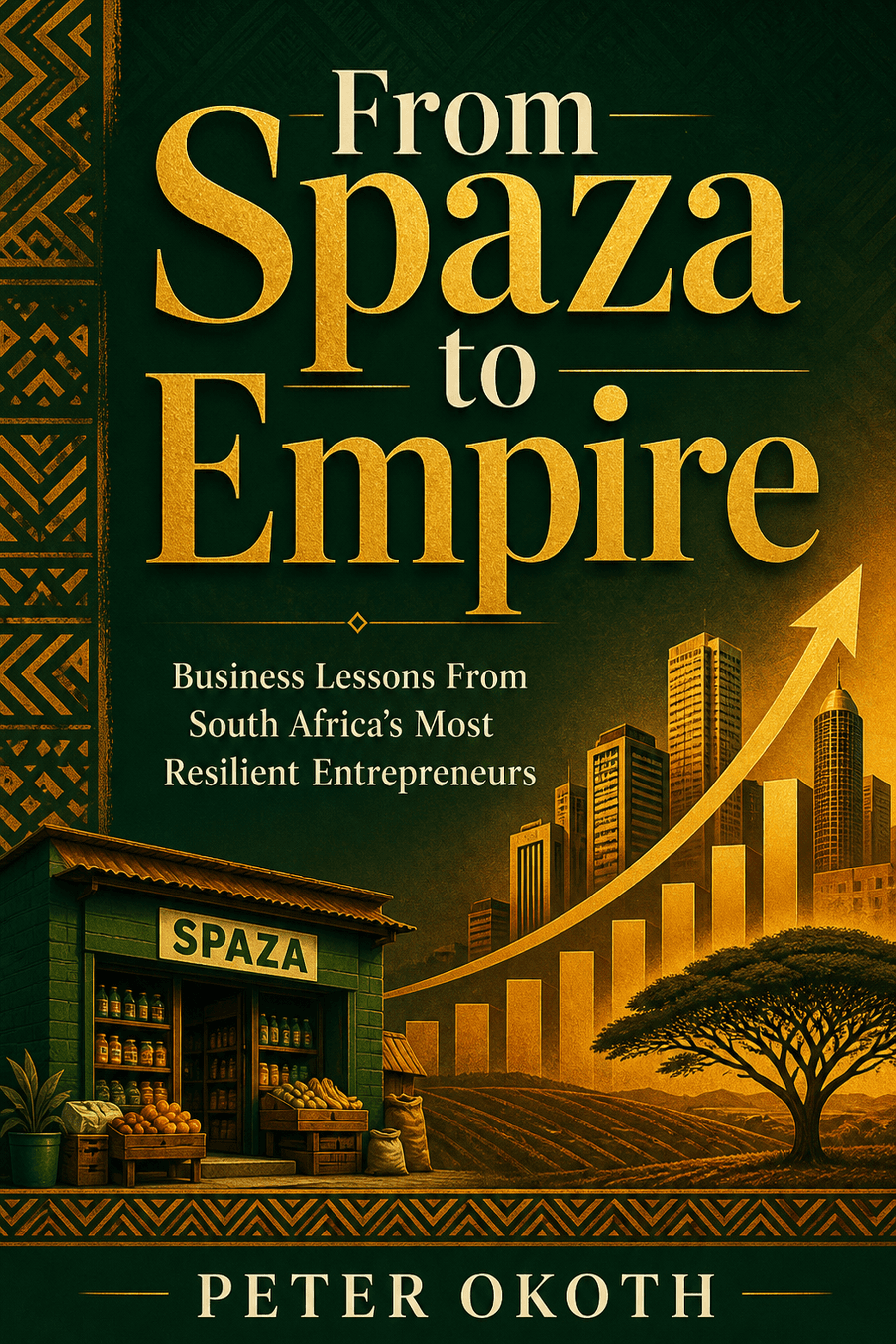
From Spaza to Empire
Business Lessons From South Africa's Most Resilient Entrepreneurs
Read the first chapter in your browser. It's free, with no account and no email needed.
Free to read. No account required.
About this book
Two entrepreneurs. One raised venture capital for a delivery app, made headlines, and closed. The other started with a spaza shop in Khayelitsha selling airtime, bread and cold drinks, and built from there without ever raising outside money.
South Africa does not need more startup fantasies imported from Silicon Valley. From Spaza to Empire studies the entrepreneurs already here, who build in townships, work through load shedding, deal with taxi association politics and keep growing despite structural barriers. You will read profiles of a minibus taxi fleet owner, a spaza shop chain, a township manufacturer, a taxi mogul, a salon that became a franchise, a digital pivot and an agribusiness builder. The book then asks what separates people who scale from those who stall, and closes with an empire blueprint for your own business.
It is for spaza owners, salon and trade operators, aspiring founders and anyone who wants growth lessons grounded in South African reality.
Look inside
Preface
Two entrepreneurs. One raised R5 million in venture capital for a delivery app. Made headlines. Burned through the money in 18 months. Closed. The other started with a spaza shop in Khayelitsha selling airtime, bread, and cold drinks. No funding, no pitch deck, no LinkedIn posts. Fifteen years later, she supplies 30 spaza shops, employs 12 people, owns two properties, and has never raised a cent from anyone.
South Africa does not need more startup fantasies imported from Silicon Valley. It needs to study the entrepreneurs who are already here – building in townships, navigating load shedding, surviving taxi association politics, and growing businesses despite structural barriers that would stop most people.
This book profiles seven of them.
Who This Book Is For
- South African entrepreneurs and side hustlers aged 20-45 who want to grow beyond their current scale
- Anyone running a small operation – spaza shop, salon, taxi, trade – who wants battle-tested growth lessons
- Aspiring business owners who want to learn from SA-specific success, not imported theory
- Readers ready for the truth: building in South Africa is hard, but the people in this book did it anyway
What You Will Walk Away With
By the last page, you will have studied seven detailed profiles of South Africans who built significant businesses from the most humble starting points. Each profile extracts the specific decisions, pivots, and systems that enabled scaling. You will close this book with a 12-month growth plan for your own enterprise, built on lessons that work in the South African context.
The South African Way of Building
Two entrepreneurs. One raised R5 million in venture capital for a delivery app. Made headlines on TechCentral. Featured on CNBC Africa. Burned through the money in 18 months. Pivoted twice. Closed.
The other started with a shipping container in Khayelitsha selling airtime, bread, and cold drinks. No funding. No pitch deck. No LinkedIn posts. Fifteen years later, she supplies 30 spaza shops across the Cape Flats. Employs 12 people. Owns two properties. Has never raised a cent from anyone.
One made noise. The other made money.
South Africa does not need more startup fantasies imported from Silicon Valley. It needs to study the entrepreneurs who are already here – building in townships, navigating load shedding, surviving taxi association politics, and growing businesses despite structural barriers that would stop most people.
This book profiles seven of them.
What You Will Learn
- Understand what makes South African entrepreneurship different from the Silicon Valley model
- Identify the three SA advantages and three SA constraints that shape every business
- Recognise the common patterns in how resilient SA entrepreneurs build
- Assess your own business stage and entrepreneurial advantages
- Prepare for the seven profiles that follow
The Silicon Valley Lie
The Reality
Most business advice available in South Africa is imported. Lean startup. MVP. Series A funding. Growth hacking. Disruption.
This advice was designed for a specific context: the US tech sector, with access to venture capital, a massive consumer market, established legal infrastructure, and reliable electricity.
South Africa is not that context. South African entrepreneurship operates with different constraints and different advantages. Trying to copy Silicon Valley in Soweto is like trying to plant Californian grapes in Limpopo soil – the climate is wrong.
What SA Entrepreneurship Actually Looks Like
The entrepreneurs you will meet in this book do not have pitch decks. They have:
- Spaza shops that serve communities no formal retailer will enter
- Minibus taxi fleets that move 15 million people daily where government transport fails
- Township salons that create employment where the formal sector offers none
- Welding workshops that manufacture for construction companies while operating from a yard
- Agribusiness operations that started with 100 chickens and scaled to 5,000
These are not glamorous. They are not disruptive. They are something better: they work.
The Three SA Advantages
1. Hustle Culture
South Africa has a deep culture of entrepreneurship born from necessity. When formal employment is not available – and for millions it is not – people create their own. Every township intersection has someone selling something. Every suburb has someone offering a service. This is not desperation. This is economic DNA.
2. Community Capital
Stokvels, burial societies, community lending circles, and family support networks provide capital where banks will not. The R50+ billion stokvel economy is the largest informal capital market on the continent. Entrepreneurs in this book funded their growth through stokvels, family loans, and community investment – not bank loans.
3. Adaptability
South African entrepreneurs operate in an environment where the rules change constantly. Load shedding schedules shift. Regulations change. Markets crash. Pandemics hit. The ones who survive are the ones who adapt fastest – and this book shows you how they do it.
The Three SA Constraints
1. Access to Capital
Banks do not lend to small township businesses. BEE procurement is complex. Government funds (SEFA, NEF, IDC) exist but are bureaucratic and slow. Most SA entrepreneurs self-fund, which limits growth speed but builds resilience.
2. Regulatory Burden
Business registration, tax compliance, labour law, municipal permits, industry-specific licensing – the regulatory load on small SA businesses is heavy. The entrepreneurs in this book navigated it. Chapter 4 (Making It Legal) in The SA Hustle Blueprint covers the step-by-step.
3. Infrastructure Gaps
Load shedding. Water interruptions. Poor roads in rural and township areas. Unreliable public transport. These are real constraints that add cost and complexity to every SA business. The entrepreneurs in this book built despite them.
The Apartheid Legacy – Acknowledged
This book does not pretend South Africa's economy is a level playing field. It is not.
Apartheid systematically denied black South Africans access to land, capital, education, and business opportunities for decades. The wealth gap it created persists today. The entrepreneurs in this book succeeded not because the system was fair, but because they found ways to build within – and sometimes around – an unfair system.
Acknowledging this is not about victimhood. It is about context. When a woman builds an R800,000 business from a spaza shop in Khayelitsha, the achievement is not the same as someone building the same business from a funded incubator in Stellenbosch. The starting line was different. The obstacles were different. The resilience required was different.
This book honours that difference.
Your Move
Before you turn the page:
- Assess your business stage: Where are you? (Idea / Survival / Stability / Growth / Scale)
- List your advantages: What do you have that the entrepreneurs in this book had – hustle, community, adaptability, specific skills, location?
- Name your biggest constraint: Capital? Knowledge? Systems? People? Regulation?
What is Next
Your first profile: a minibus taxi driver in Soweto who started with one borrowed vehicle and built a fleet of 15 taxis over 10 years. The taxi industry is brutal, political, and profitable. The lessons are transferable to any asset-based business.
The Minibus Taxi Fleet Owner
Themba is 44. He drives nothing flashy – a bakkie he bought cash in 2020. He lives in Soweto, in a house he renovated himself. He does not look like someone who controls R4.5 million in assets.
But Themba owns 15 minibus taxis operating on the Soweto-Joburg CBD route. Each taxi earns approximately R2,500 per day. Across his fleet, that is R37,500 per day. Approximately R825,000 per month in gross revenue. After driver wages, fuel, insurance, maintenance, and association fees, his monthly profit is approximately R180,000.
He started as a driver. He earned R800 per day. He owned nothing.
This is how he built it.
What You Will Learn
- How Themba went from employed driver to fleet owner
- The economics of the minibus taxi industry – real numbers, real margins
- How he navigated taxi association politics and route access
- The driver management system that prevents theft and maintains accountability
- The fleet expansion strategy: one taxi at a time, never with bank debt
Free to read. No account required.